Buddy Walker
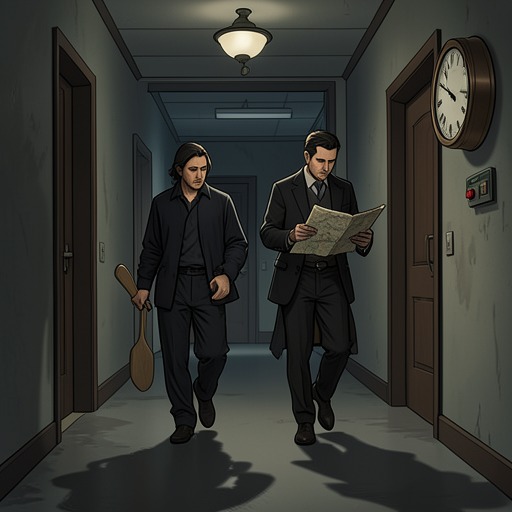
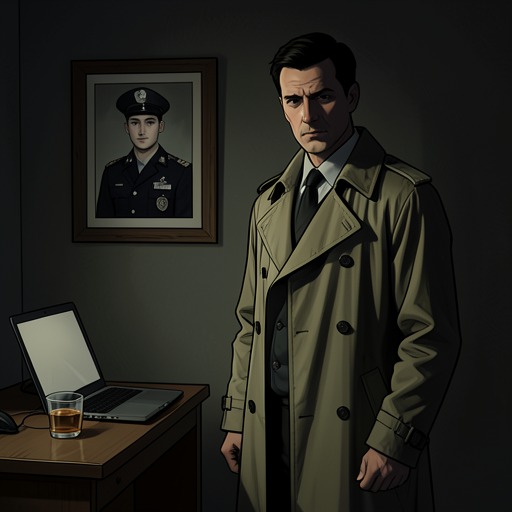
Dead ShotBuddy Walker is introduced as the head boys’ basketball coach and an assistant football coach at Statenville High School, but his apparent identity as a young, somewhat unsophisticated educator is a cover for one of the novel’s most consequential deceptions. Behind the coach’s energetic public persona stands an FBI agent whose impatience, ambition, and willingness to violate procedure make him central to both the exposure of Cloverdale Industries and the deaths that bring the investigation into focus.
Identity and Public Role
Walker is new by Statenville standards and is preparing to begin his third year at the school when Cal Murphy and Kelly Mendoza encounter him. Coaching positions there rarely open because Statenville High School is not treated as a stepping-stone toward jobs in Boise or Salt Lake City. It is a final destination for people who are either from the town or prepared to remain there indefinitely. Walker is not a native of Statenville, and local residents are unconvinced that he intends to make the community his permanent home.
Cal initially judges Walker as less intelligent than the school’s ideal coach, although he recognizes the youthful energy that helped Walker replace the popular predecessor Nick Zentz after Zentz’s death in a hunting accident. This surface description is important because Walker’s apparent limitations help him pass as an ordinary coach rather than an investigator. His position gives him access to athletes, school routines, and the town’s social structure while making his presence seem unremarkable.
Walker’s public life is also connected to the culture that surrounds Statenville’s student athletes. Coach Miller tells Cal and Kelly that drug use among promising athletes is treated with disturbing indifference. Cody Murray’s father even supports his son’s drug use if it helps him advance, while Miller explains that meth can provide energy for longer workouts and that college coaches may value a player’s physical appearance more than academic work. Walker therefore operates inside a system where athletic ambition, chemical enhancement, and adult rationalization have already blurred together.
The Hidden FBI Assignment
Walker’s real identity is disclosed when the FBI confirms that Deangelo, now operating under the name Nathan Gold, is the architect of a major drug operation. The bureau places two agents in Statenville under deep cover to collect prosecutable evidence against Gold, Cloverdale Industries, and the wider network that sells and transports the company’s drugs. Walker and Elliott Mercer are those agents. Their FBI-created identities include carefully constructed backgrounds and even minor encounters with the law, designed to survive Gold’s scrutiny.
The operation lasts five years. Walker and Mercer accumulate enough information to fill a small library, tracking the locations and movement of Gold’s operation, but the FBI does not want merely to arrest Gold. It wants everyone connected to the network, including distributors moving drugs across state lines. Walker’s ambition is larger still: he wants a public collapse dramatic enough to become the story of the year, even if he receives no official credit for bringing down the Northwest’s largest drug cartel.
Walker’s impatience becomes a defining weakness. He waits for Gold to make a mistake, but when Chris Cooper arrives from the FBI’s Salt Lake field office and begins making career-ending accusations, Walker decides that ordinary protocol will not accomplish the assignment. He tells himself that unorthodox and sometimes illegal methods are necessary to finish the job, while privately longing to leave what he regards as a miserable town. His desire to see Statenville disappear in his rearview mirror competes with the bureau’s demand for a controlled, prosecutable case.
Surveillance, Pursuit, and Betrayal
Walker’s apparent helpfulness collapses into menace when he pursues Cal and Kelly. During a confrontation, he shifts his car into drive with one hand while fingering a gun with the other, wondering whether the two journalists have finally become easy targets after eluding him all day. The gesture converts the familiar coach into an armed pursuer and reveals how completely his undercover mission has overridden his public role.
At Cloverdale Industries, security personnel receive instructions to treat Cal and Kelly as intruders and are given a shoot-to-kill order. Walker’s connection to the facility makes the danger more complicated than a simple corporate security response. Nathan Gold has designed extensive background checks for Cloverdale employees, yet Walker has slipped through the system as a coach supposedly taking extra work to support his elderly mother. Gold knows that employees who expose the company’s secret could lose their paychecks and face long federal prison terms, but Walker’s carefully manufactured identity initially appears harmless.
Walker’s cover is eventually threatened by the arrival of another FBI agent and by Cal and Kelly’s investigation. Gold realizes that the coach is not merely a local employee or an ambitious school figure but part of a coordinated federal operation. Walker’s long assignment is nearly over, and he is forced to race toward Cloverdale while Mercer sits beside him. The presence of Mercer gives Walker an ally during the crisis, but it also exposes the unstable boundary between legitimate federal work and the unauthorized actions Walker has taken in its name.
Elliott Mercer becomes increasingly important as the manhunt closes around Walker. The search includes local law enforcement and the unidentified thugs on Cloverdale’s payroll. Mercer gives Walker’s search party a misleading tip that sends it across the county and away from Cloverdale Industries. He then studies the Statenville Sheriff’s Department, passes a trust test, and learns the town’s deepest secret. Mercer and Walker agree that the drug operation and its mob-like leadership must be exposed, but their partnership is not morally equal: Mercer later tries to separate himself from Walker’s worst decisions and shape the public story in his own favor.
The Drug-Marker Experiment
Walker’s most damaging action begins with an FBI idea that had already been abandoned. He experiments with chemical formulas intended to mark drug shipments so investigators can trace the operation’s distribution network and trigger the attention of the Centers for Disease Control and Prevention. The bureau had stopped the research because animal testing produced horrific deaths: monkeys nearly tore themselves apart, and dogs scratched and clawed themselves to death. Officials concluded that the method might work in theory but did not meet the ethical standard required for human testing.
Walker believes his minor in chemistry gives him enough knowledge to challenge the bureau’s professional chemists. He pressures Mercer to help insert the chemicals into drug batches, although the first amounts are too small to track an entire shipment. The experiment is not a controlled investigative tool. Walker cannot control where the marked portion will go, and Mercer warns him about the danger.
Walker then finds a batch of drugs in Riley Gold’s car and decides to place the marker there. Because the coaching staff knows that several players have recently begun using drugs, Riley seems to Walker like an easy subject through whom the distribution could be observed. Walker expects to watch Riley and possibly his teammates, but he does not account for the possibility that the chemical compound could kill them. His haste turns a surveillance device into a lethal instrument.
The consequences reach back to the three Statenville high school football stars whose deaths are initially described as meth overdoses. The final account explains that FBI officials determine the young athletes died from the markers laced into the meth, not from the meth itself. The compound was intended to imitate the sudden onset of a rare disease so that the CDC would notice and alert the FBI; it was never intended to be fatal. Walker’s attempt to produce an investigative breakthrough therefore becomes part of the mechanism that creates the case’s apparent mystery and its concealed body count.
Change and Narrative Significance
Walker’s transformation is a reversal of the expected coach figure. He begins as a plausible local authority whose youthful energy and marginal outsider status make him easy to overlook. He becomes an armed pursuer, an undercover agent racing to complete an assignment, and an investigator willing to revive a research program abandoned for ethical reasons. His public role depends on trust, but his professional method depends on concealment; the contradiction eventually makes both identities dangerous.
His actions also mirror the athletic culture around him. Just as Cody Murray seeks a chemical boost to work longer and become stronger, Walker seeks a chemical shortcut to accelerate an investigation and produce a spectacular result. The logic is similar: more intensity, more pressure, and a visible victory are treated as justification for risk. Walker’s version is institutional rather than athletic, but both forms of ambition turn bodies into instruments. The boys become test subjects, while Walker treats his own career and the town itself as stakes in a competition he must win.
Cal Murphy’s encounter with Walker becomes especially significant because Cal is trying to distinguish physical evidence from official explanations. Cal has seen dead people, visible drugs, and threats to his life, yet Walker’s presence remains difficult to interpret until the larger conspiracy emerges. Even while fleeing with Kelly, Cal cannot stop constructing theories about why Walker tied them up and what connection he has to Cloverdale. Walker thus functions as a deliberately unstable clue: he appears to be a coach, behaves like an enemy, and is ultimately revealed as an FBI agent whose pursuit of justice has helped produce the crime’s most tragic consequence.
Walker’s ending is not a clean heroic return. He helps expose Gold’s operation, but his methods leave Mercer holding incriminating knowledge about Gold and about the death of Gold’s son, while Mercer seeks to present himself as a hero rather than as Walker’s accomplice. The national report identifies the deep-cover FBI agents and explains the drug-marker scheme, but it does not erase Walker’s responsibility. His failure lies not in wanting to stop Cloverdale Industries, but in believing that a spectacular result can excuse uncontrolled experimentation, deception, and violence. Through Walker, the novel makes undercover justice resemble the criminal system it targets: both claim a higher purpose, and both conceal the human cost until the evidence can no longer be suppressed.